The short answer
Choose weekly private lessons when your child wants steady progress on one instrument. Choose a camp or short workshop when they want friends, ensemble playing, or a performance goal. Choose a flexible hybrid when travel and family plans make a strict schedule unrealistic.
For many families, summer can be a useful time to begin music because the school-year pressure is lower. It can also be a messy time to commit. Los Angeles families may be balancing camps, trips, traffic, shared custody schedules, and days when nobody wants to sit in a car for another hour.
The right choice is not the program with the longest day or the most impressive description. It is the format your child can enjoy long enough to hear progress.
Three realistic summer options
Weekly private lessons
Best for focused help, a personal pace, and progress on piano, guitar, voice, bass, songwriting, or production.
Camp or workshop
Best for kids who want a group, a deadline, a concert, or the energy of making music with other students.
A flexible hybrid
Best for uneven travel weeks: a few lessons, one short program, and a small recording or song project at home.
| Format | Main strength | Watch out for |
|---|---|---|
| Weekly lessons | Personal feedback and steady skill building | A rigid schedule can fall apart around travel |
| Camp or workshop | Community, variety, and performance energy | A busy week may not fix the child's specific technical problem |
| Hybrid plan | Flexible and easy to shape around summer | It still needs one clear goal or it can become random activities |
Start with the decision your child is actually making
Parents often begin by searching for a program. Start one step earlier. What does your child want to be able to do by the end of summer?
- Play one favorite song from beginning to end
- Feel comfortable singing in front of someone
- Join a band or make music with other kids
- Write and record a first song
- Try an instrument before committing for the school year
- Rebuild confidence after lessons became frustrating
A clear goal makes the format easier to choose. A student who wants to learn a favorite piano song needs different support from a student who mainly wants the social experience of a summer ensemble.
When weekly lessons are the better choice
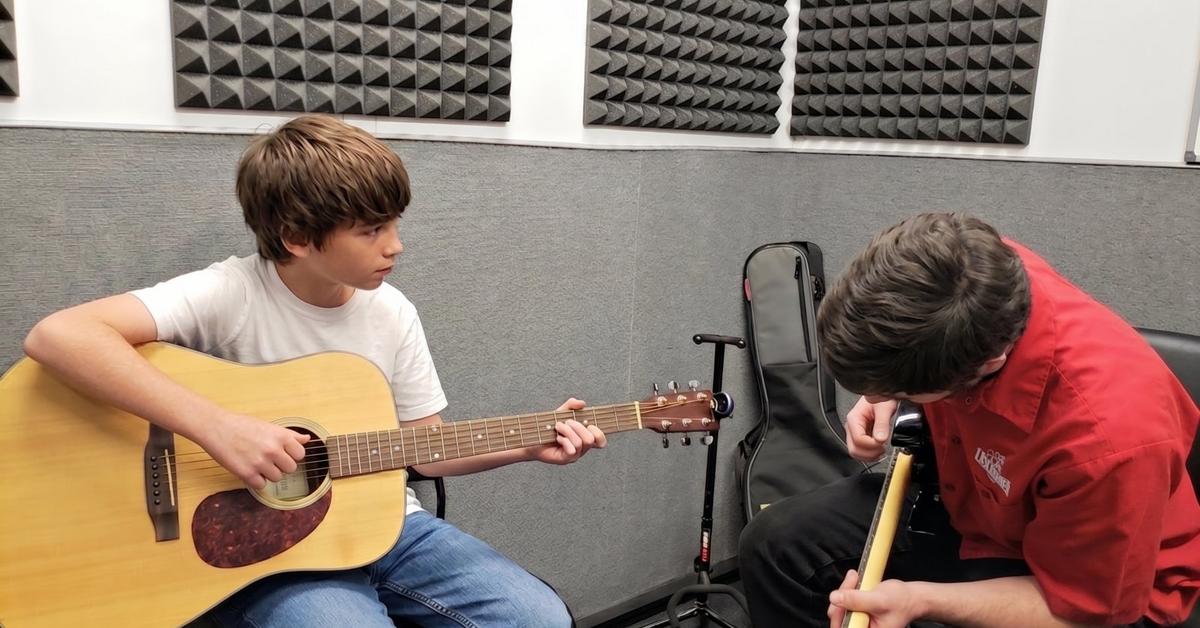
Private lessons work well when a child has a specific interest but needs help turning it into a plan. They can spend more time on the exact friction point: reading notes, changing chords, matching pitch, keeping a beat, coordinating two hands, or figuring out how to practice without a parent managing every minute.
Summer lessons do not have to imitate the school year. A teacher can build a six- or eight-week project around one song, a short performance, a recording, or a creative challenge. That gives the student direction without filling every free afternoon.
Weekly lessons can also be easier to adjust for a shy child, a total beginner, or a student who gets overwhelmed in a large group. The pace can change immediately instead of waiting for the rest of a class.
When a music camp or workshop is worth it
A camp becomes valuable when the group is part of the goal. Playing with other students teaches listening, counting, recovering from mistakes, and staying connected when the music keeps moving. A final concert can give practice a real reason.
Before registering, ask what students will actually do each day. How much time is spent playing? Are beginners grouped by experience? Will your child work on one instrument or rotate through several? Is the final performance supportive or high-pressure? What happens if a student needs a quieter pace?
A polished program name does not answer those questions. The daily structure does.
How to build a summer plan that survives Los Angeles life
In Los Angeles, location is part of the lesson format. Compare the complete door-to-door time for studio lessons, ask whether in-home teaching includes a travel fee, and find out whether online makeups are available when traffic or a family trip disrupts the week. For a camp, make sure the daily drive still feels realistic by the third or fourth day, not only on registration day.
Count the full time cost, not only the lesson. A 45-minute activity can take most of an afternoon once traffic, parking, food, and transitions are included. That may still be worth it for the right ensemble or teacher. It just needs to fit the family week.
- Choose one anchor. One weekly lesson, one camp, or one project is enough to organize the summer.
- Keep practice short. Three focused sessions of 15 to 20 minutes can beat one long weekly struggle.
- Plan around trips before booking. Ask about online makeups, pause weeks, and whether materials can travel.
- Use the home instrument. A child should practice on a setup that is comfortable, working, and easy to reach.
- End with something shareable. Record a song, play for family, or perform with a group. The finish line should feel musical, not like a test.
My recommendation for most beginners
Start smaller than you think. Give the child one weekly lesson and one goal they helped choose. If they keep talking about playing with other kids, performing, or trying more instruments, add a short camp or workshop. If travel breaks the schedule, use an online lesson and keep the project moving.
The goal is not to keep a child busy all summer. It is to help them discover whether making music is something they want to keep doing when school starts again.
A five-minute parent checklist
- Did my child help choose the instrument or goal?
- Does the schedule leave room for actual summer?
- Will the teacher or program adjust for a beginner?
- Do we know what the child will make, play, or perform?
- Can we continue in the fall if the fit is good?