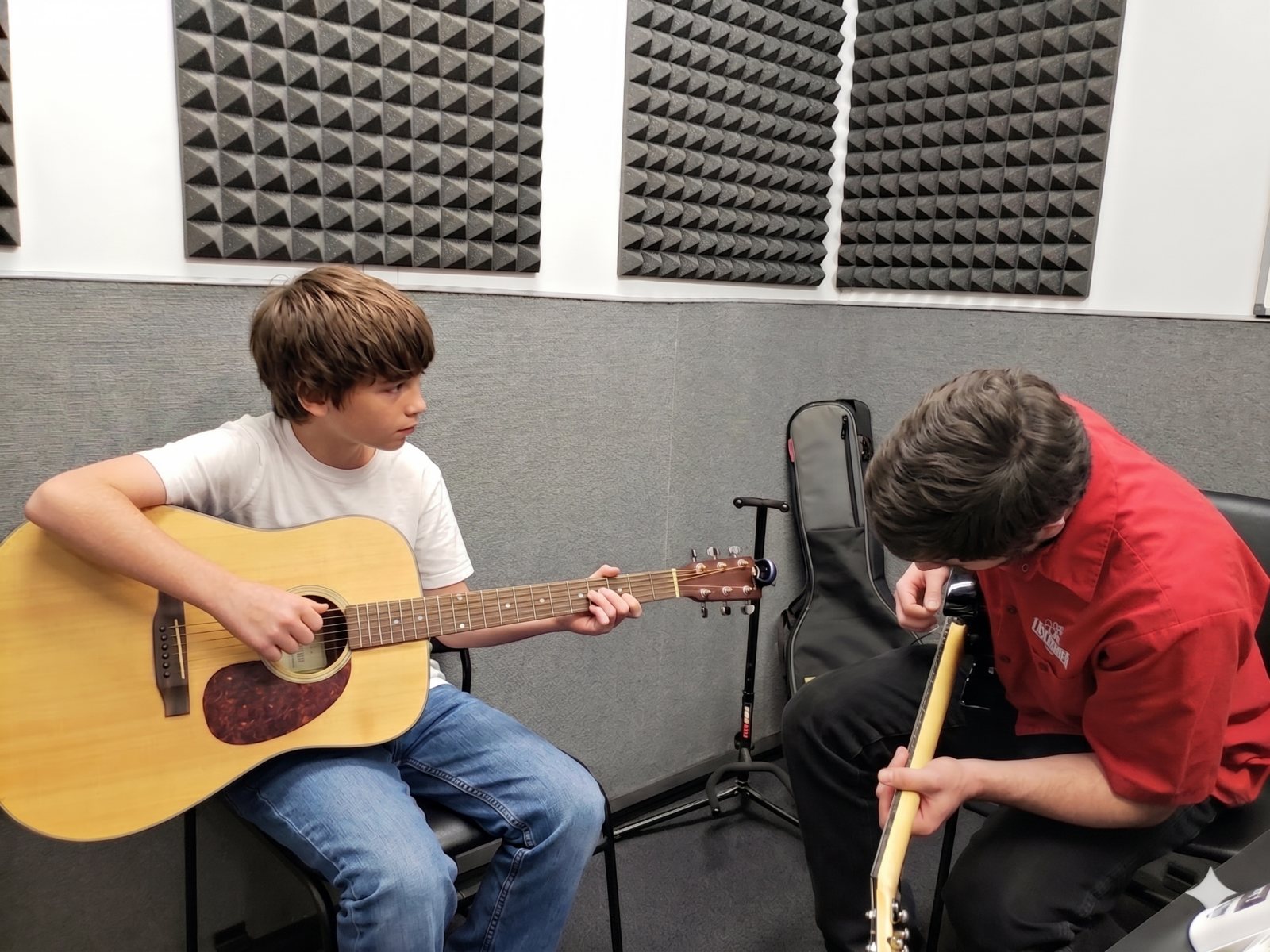
Los Angeles is home to thousands of working musicians, session players, and music educators. That's great news if you're looking for a music teacher - but it also means the search can be overwhelming. How do you separate the genuinely excellent instructors from the ones who are just filling time between gigs?
Whether you're looking for piano lessons, guitar instruction, bass lessons, or music production training, the principles for choosing the right teacher are the same. I've been teaching music in Los Angeles for years, and I've seen what works - and what doesn't - from both sides of the music stand.
This guide breaks down everything you need to consider before committing to private music lessons in LA.
1. Experience Matters - But Not the Way You Think
When most people evaluate a music teacher in Los Angeles, they look at performance credentials first. Did they play at the Hollywood Bowl? Have they toured with a famous artist? While performing experience is valuable, teaching experience is a completely different skill.
A world-class performer who can't explain concepts clearly or adapt to different learning styles won't help you progress. Conversely, a dedicated educator with deep knowledge of pedagogy, music theory, and technique can transform a complete beginner into a confident musician.
The sweet spot is a teacher who has both - someone who has spent serious time performing and serious time teaching. Look for instructors who have been teaching for at least five years and can demonstrate a track record of student progress.
For context, I've been playing piano for over 22 years, producing and engineering music for more than a decade, and I hold a degree in Open Music Studies from the University of Illinois at Urbana-Champaign. But what I'm most proud of is watching students go from "I can't play anything" to performing songs they love within a few months. That's the teaching part - and it's what matters most for your experience.
2. Teaching Style and Philosophy
Every music teacher has a different approach. Some are strict and classical - scales, exercises, theory drills. Others are laid-back and play-by-ear focused. Neither approach is inherently wrong, but one might be wrong for you.
Before your first lesson, ask the teacher about their teaching philosophy. Good questions include:
- How do you structure a typical lesson? - Look for a mix of technique, theory, and repertoire.
- Do you tailor lessons to student goals? - A rigid curriculum is a red flag unless you specifically want that structure.
- What genres do you cover? - If you want to learn jazz piano, make sure your teacher actually knows jazz, not just classical.
- How do you handle students who get stuck? - The answer reveals whether they're patient and creative problem-solvers.
My approach is goal-oriented. When a new student comes in, I ask: what do you want to be able to do in six months? Play a specific song? Improvise over chord changes? Record your own music? That goal shapes everything we work on. Music theory, technique, and ear training get woven into the process naturally, rather than being treated as separate, boring exercises.
3. Credentials and Education
A music degree isn't strictly necessary to be a great teacher, but it signals a depth of knowledge that's hard to replicate through self-study alone. When a teacher has studied music formally, they've been exposed to music theory, history, pedagogy, arranging, and a range of performance contexts that broadens their ability to teach.
Here's what to look for in credentials:
- Music degree (BA, BM, MM) from an accredited program
- Teaching certifications (MTAC, NCTM, or equivalent)
- Professional performance experience - gigs, recordings, session work
- Production or engineering credits if you're interested in the recording side
- Student testimonials or reviews that speak to actual learning outcomes
Don't be afraid to ask about these. A qualified teacher will be happy to share their background. If someone gets defensive or vague about their qualifications, that's a red flag.
4. The Trial Lesson Is Everything
This is the single most important piece of advice in this entire article: always take a trial lesson before committing.
A trial lesson lets you experience the teacher's communication style, see their studio or setup, and gauge the personal chemistry. Music lessons are a one-on-one relationship that can last months or years - you need to actually enjoy spending time with this person.
During the trial, pay attention to:
- Did the teacher listen to your goals, or did they launch into a generic curriculum?
- Were explanations clear? Could you follow along?
- Did you feel encouraged rather than judged?
- Was the pace appropriate - not too fast, not painfully slow?
- Did you leave feeling excited to practice?
I offer a $20 intro lesson for exactly this reason. No commitment, no pressure. It's a chance to meet, play a little, talk about your goals, and see if we're a good fit. If we are, great - we'll build a plan. If not, no hard feelings.
5. Location, Format, and Convenience
In a city as sprawling as Los Angeles, logistics matter. A fantastic teacher in Pasadena isn't practical if you live in Venice and have to sit through 45 minutes of traffic each way. Factor in:
- In-person vs. online: In-person is ideal for beginners (hands-on technique correction), but online lessons have become excellent thanks to high-quality video and audio technology.
- Studio location: Is it convenient to your home or work? Is parking available?
- Travel teachers: Some instructors come to your home. This is convenient but usually costs more.
- Scheduling flexibility: Does the teacher offer evening or weekend slots? Can you reschedule without penalty?
My studio is located in West Hollywood, near Fairfax High School - central to Hollywood, Mid-Wilshire, Beverly Grove, and the surrounding neighborhoods. I also offer online lessons for students who prefer the flexibility of learning from home. Either format, the quality of instruction stays the same.
6. Pricing: What Private Music Lessons Actually Cost in LA
Los Angeles music lesson rates vary widely. Here's a realistic breakdown of what you can expect to pay in 2026:
- Budget range ($30-$50/hour): Usually newer teachers, college students, or part-time instructors. Quality varies dramatically.
- Mid-range ($50-$90/hour): Experienced teachers with credentials and a consistent teaching practice. This is the sweet spot for most students.
- Premium range ($100-$150+/hour): Well-known instructors, Berklee/USC/UCLA faculty, or specialists in niche areas.
Be cautious of prices that seem too good to be true. A $20/hour guitar lesson on Craigslist might save you money in the short term, but if the instruction quality is poor, you'll waste months developing bad habits that a better teacher would have to fix later.
My rates are designed to be accessible while reflecting the quality of instruction: $40 for 30 minutes, $60 for a full hour, with a $20 intro to start. I also offer studio time for production and engineering projects at $60/hour.
7. Versatility: Can Your Teacher Cover What You Need?
Here's something a lot of people don't think about: your musical interests might evolve. You might start taking piano lessons and realize you also want to learn how to produce beats. Or you might be a guitarist who wants to understand music theory at a deeper level.
A versatile teacher who covers multiple instruments and disciplines can grow with you. Instead of finding a new instructor every time your interests shift, you work with someone who already knows your strengths, weaknesses, and learning style.
This is one of the things I focus on in my teaching practice. I teach piano, guitar, bass, music production in Ableton, audio engineering, and mixing/mastering. If a piano student wants to start recording their compositions, we can pivot into production without missing a beat. That continuity is valuable.
8. Red Flags to Watch Out For
Not every music teacher in LA is worth your time and money. Watch for these warning signs:
- No trial lesson offered: Any confident teacher will let you try before you buy.
- Rigid, one-size-fits-all curriculum: Good teaching is adaptive, not cookie-cutter.
- Constantly canceling or rescheduling: Your time matters. A teacher who doesn't respect it won't help you progress.
- Can't explain why: If a teacher tells you what to do but never explains the underlying theory or reason, you won't develop real musical understanding.
- No clear progression plan: After a few lessons, your teacher should be able to articulate where you are, where you're headed, and how you'll get there.
- Negative or discouraging attitude: Music education should build confidence. If you leave lessons feeling worse about your abilities, something is wrong.
9. How to Get the Most Out of Your Lessons
Finding the right teacher is only half the equation. Here's how to maximize your investment once you've committed:
- Practice consistently: Even 15-20 minutes daily beats a two-hour cram session once a week.
- Come prepared: Review what you worked on last lesson. Know what you struggled with.
- Ask questions: Don't nod along if something doesn't make sense. Your teacher wants to help - but they need to know where you're confused.
- Record your lessons: Most teachers are fine with this. Reviewing lesson recordings is one of the most effective practice tools available.
- Set milestones: Work with your teacher to set achievable goals - a song to learn by next month, a scale to master by next week.
- Be patient: Progress in music isn't linear. Some weeks you'll feel like you're flying; others, you'll feel stuck. That's normal. Trust the process.
10. Where to Find Music Teachers in Los Angeles
Here are the most common places to search, along with the pros and cons of each:
- Google Search: Searching "music teacher Los Angeles" or "piano lessons near me" surfaces teachers who've invested in their online presence. These teachers tend to be more established and professional.
- Thumbtack / TakeLessons / Lessonface: Marketplace platforms with reviews and ratings. Convenient, but the platforms take a cut, which can affect pricing or teacher quality.
- Instagram / YouTube: Look for teachers who post educational content. It gives you a preview of their teaching style and personality before you ever meet.
- Word of mouth: Still the gold standard. Ask musician friends, local music stores, or community groups for recommendations.
- Music schools: Places like the Los Angeles Music Academy or local community colleges have referral networks. The downside is less scheduling flexibility.
Ready to Find Your Music Teacher?
Choosing a music teacher is a personal decision. The right teacher makes you excited to practice, challenges you without overwhelming you, and helps you reach goals you didn't think were possible.
If you're looking for private music lessons in Los Angeles - whether that's piano, guitar, bass, or music production - I'd love to chat. I offer a $20 intro lesson so we can meet, discuss your goals, and see if we click.
No sales pitch, no pressure. Just music.
Frequently Asked Questions
How much do private music lessons cost in Los Angeles?
Private music lesson rates in LA typically range from $40 to $120 per hour depending on the teacher's experience, location, and instrument. Many teachers offer discounted rates for 30-minute sessions and package deals. Thaddeus Arndt offers a $20 intro, $40 for 30 minutes, and $60 for a full hour.
Should I choose an in-person or online music teacher?
Both options work well. In-person lessons allow the teacher to physically adjust your technique and posture - especially important for beginners. Online lessons offer convenience and flexibility. Many LA teachers, including Thaddeus, offer both formats so you can choose what works best for your schedule.
What qualifications should a music teacher have?
Look for a combination of formal education (music degree), performance experience, and teaching experience. A music degree shows theoretical depth, while years of performing and teaching demonstrate practical ability. Most importantly, find a teacher who communicates effectively and adapts to your learning style.
How do I know if a music teacher is right for me?
Take a trial lesson. Pay attention to whether the teacher listens to your goals, explains things clearly, and makes you feel comfortable. A good teacher should challenge you while keeping lessons enjoyable. Trust your instinct after the first session.
How often should I take music lessons?
Most students benefit from weekly lessons, which provides enough time to practice between sessions while maintaining consistent progress. Some advanced students take lessons twice a week, while casual learners may opt for biweekly. Your teacher can help you determine the right frequency based on your goals.